

Is Banana Bread Healthy or Unhealthy? This question stirs as much debate as any comfort food can in today’s nutrition-conscious culture. It may seem simple at first glance. After all, bananas are fruit. How bad can bread made from fruit be? Yet a deeper look reveals that banana bread walks a fine line between indulgent dessert and nourishing snack. Whether it leans toward one or the other depends heavily on how it is made, how often it is eaten, and the ingredients used.
Banana bread carries the comforting aroma of home baking and the familiarity of something that is both easy and beloved. Often served as a breakfast side, an afternoon snack, or even a quick dessert, it has earned a permanent place in kitchens around the world. But is it actually good for you? To answer this, we need to break down its nutritional makeup, look at its history, and explore the many ways it can be tweaked to suit a variety of diets and health goals.
Table of Contents
Is Banana Bread Healthy or Unhealthy?

This gluten-free banana bread is naturally sweetened, moist, and full of nutritious ingredients, perfect as a wholesome breakfast, snack, or pre-workout bite.
- Prep Time: 10 minutes
- Cook Time: 50 minutes
- Total Time: 1 hour
- Yield: 1 loaf (8 slices) 1x
- Category: Breakfast
- Method: Baked
- Cuisine: Gluten-Free
Ingredients
- 3 ripe bananas, mashed
- 2 large eggs
- 1/4 cup maple syrup or honey
- 1/4 cup melted coconut oil or butter
- 1 tsp vanilla extract
- 1 1/2 cups gluten-free oat flour or almond flour
- 1/2 cup gluten-free rolled oats
- 1 tsp baking soda
- 1/2 tsp cinnamon
- 1/4 tsp salt
- Optional: 1/4 cup chopped walnuts or dark chocolate chips
Instructions
- Preheat oven to 350°F (175°C). Grease or line a 9×5-inch loaf pan with parchment paper.
- In a large mixing bowl, mash the bananas.
- Add eggs, maple syrup, melted oil, and vanilla extract. Whisk until smooth.
- Stir in oat flour, oats, baking soda, cinnamon, and salt. Mix until just combined.
- Fold in optional mix-ins like nuts or chocolate chips.
- Pour batter into prepared pan and smooth the top.
- Bake for 45–55 minutes, or until a toothpick inserted in the center comes out clean.
- Cool in pan for 10 minutes, then transfer to a wire rack to cool completely.
Notes
Use almond flour for a grain-free version.
Add flaxseed or chia for extra fiber and protein.
Store in the fridge for up to 5 days, or freeze slices for quick snacks.
Nutrition
- Serving Size: 1 slice
- Calories: 210
- Sugar: 9g
- Sodium: 180mg
- Fat: 9g
- Saturated Fat: 4g
- Unsaturated Fat: 4g
- Trans Fat: 0g
- Carbohydrates: 28g
- Fiber: 3g
- Protein: 4g
- Cholesterol: 35mg
Nutritional Breakdown: What’s in Banana Bread?
At its core, banana bread is made with simple ingredients. A traditional recipe usually includes mashed ripe bananas, white flour, sugar, eggs, baking soda, butter or oil, and a touch of vanilla. While none of these ingredients are inherently harmful, their quantities and combinations matter. Below is a breakdown of what each component typically adds to the recipe:
| Ingredient | Role in Recipe | Nutrition Consideration |
|---|---|---|
| Bananas | Flavor, sweetness, moisture | High in potassium, fiber, vitamin B6 |
| White Flour | Structure and texture | Low fiber, high glycemic index |
| Sugar | Sweetness | Excess can lead to blood sugar spikes |
| Butter or Oil | Moisture and richness | High in fat and calories |
| Eggs | Binding and structure | Good protein, but adds cholesterol |
If you’re unsure why your banana bread sometimes comes out raw in the middle, check out our guide on Why Is Banana Bread Not Cooked in the Middle? for baking tips and troubleshooting advice.
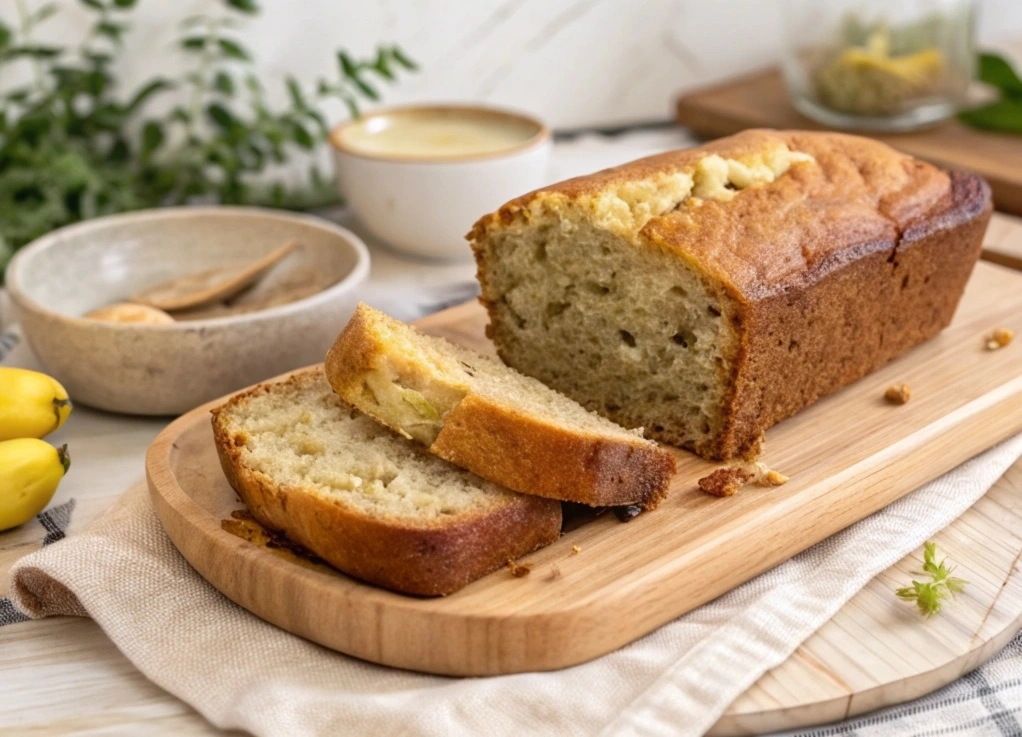
While bananas bring fiber and potassium to the table, most traditional banana bread recipes are high in sugar and refined carbs. A single slice can contain between 200 and 400 calories, depending on its size and ingredients, which puts it closer to dessert than health food.
If you’re looking to enhance your banana bread recipe, we recommend trying Cottage Cheese Banana Bread, which uses protein-rich dairy for a more balanced nutritional profile. It’s one of our favorite ways to keep banana bread both moist and guilt-free.
Also, if your banana bread often collapses after baking, you might want to read our piece on Why Did Banana Bread Collapse? for science-based insights on baking structure and stability.
Is All Banana Bread Created Equal?
Not at all. Store-bought banana bread and homemade versions can vary drastically in terms of nutrition. Commercially baked banana bread often includes preservatives, excess sugar, and oils to extend shelf life and enhance flavor. Homemade banana bread gives you more control over the ingredients, making it easier to reduce sugar, increase fiber, and eliminate unnecessary additives.
Here is a simple nutritional comparison:
| Type | Calories (per slice) | Sugar (g) | Fiber (g) | Total Fat (g) |
|---|---|---|---|---|
| Store-bought banana bread | 320 | 22 | 1 | 13 |
| Homemade (classic) | 280 | 18 | 2 | 10 |
| Homemade (healthier version) | 220 | 10 | 4 | 7 |
The difference is clear: a healthier banana bread made with fiber-rich flours, less sugar, and better fat choices can be part of a nutritious lifestyle.
The History of Banana Bread
Banana bread rose to popularity in the United States during the Great Depression in the 1930s. With the widespread availability of baking soda and baking powder, home bakers began experimenting with overripe bananas that would otherwise go to waste. The result was a moist, flavorful loaf that required no yeast or long proofing times.
It was also during this time that cookbooks and baking powder companies promoted banana bread as an economical and practical dessert. Since then, it has evolved with the times. From vegan versions to gluten-free alternatives, banana bread continues to reflect the dietary priorities of its era.
Can Banana Bread Fit into a Healthy Diet?
The answer is yes, with the right adjustments. Healthier versions of banana bread often swap white flour for whole wheat, almond, or oat flour. Sugar can be reduced or replaced with natural alternatives like maple syrup or coconut sugar. Fat sources can be upgraded by using Greek yogurt or applesauce in place of butter or vegetable oil.
Adding mix-ins such as chia seeds, walnuts, or flaxseeds can boost protein and omega-3 content. These upgrades increase satiety, improve nutrient density, and stabilize blood sugar levels. A healthier banana bread won’t just taste good; it can actually make you feel good after eating it.
Here’s a comparison of a traditional vs healthier banana bread ingredient list:
| Traditional Banana Bread | Healthier Banana Bread |
|---|---|
| 3 ripe bananas | 3 ripe bananas |
| 1 cup white sugar | 1/3 cup coconut sugar |
| 2 cups all-purpose flour | 1 cup oat flour, 1 cup almond flour |
| 1/2 cup butter | 1/3 cup Greek yogurt |
| 2 eggs | 2 flax eggs (vegan) |
| 1 tsp baking soda | 1 tsp baking soda |
| 1 tsp vanilla extract | 1 tsp vanilla extract |
With these substitutions, banana bread transforms from a sugar-heavy treat into a nourishing food that can be part of your everyday routine.

FAQs: Is Banana Bread Healthy or Unhealthy?
Is banana bread good for weight loss?
Banana bread can fit into a weight-loss plan if it’s made with wholesome ingredients like whole wheat flour, natural sweeteners, and minimal added fats. Traditional banana bread recipes high in sugar and butter may not support weight loss goals. If you’re watching calories or carbs, opt for a lighter version like our Cottage Cheese Banana Bread that delivers protein and moisture without the excess sugar.
Is banana bread healthier than regular bread?
It depends on the type of bread you’re comparing it to. Banana bread tends to have more sugar and fat than whole-grain sandwich bread, but it also offers nutrients from bananas like potassium and vitamin B6. Compared to highly processed white bread, a homemade banana bread with less sugar and added fiber can be the healthier choice.
Is banana bread ok to eat on a diet?
Yes, in moderation. Portion control is key. A single slice made with clean ingredients—think mashed banana, whole wheat flour, and healthy fats—can be a diet-friendly option. However, calorie-dense varieties loaded with sugar, butter, and refined flour can quickly derail a diet plan. Balance is essential.
Is banana bread a junk food?
Not inherently. While store-bought or bakery versions often contain high levels of sugar, preservatives, and unhealthy fats, banana bread made at home with whole food ingredients is far from junk. You can even experiment with versions that include Greek yogurt or almond flour for added protein and nutrients.

Final Thoughts
So, is banana bread healthy or unhealthy? The answer depends on you. When made traditionally, it sits closer to the dessert category. When thoughtfully adapted, it becomes a flexible and nutritious food that can serve as breakfast, a snack, or even a pre-workout bite.
If you’re craving something sweet but want to keep your nutrition on track, banana bread can absolutely work in your favor. Be mindful of ingredients, choose natural sweetness, opt for whole grains, and don’t be afraid to add nutrient-rich mix-ins.