
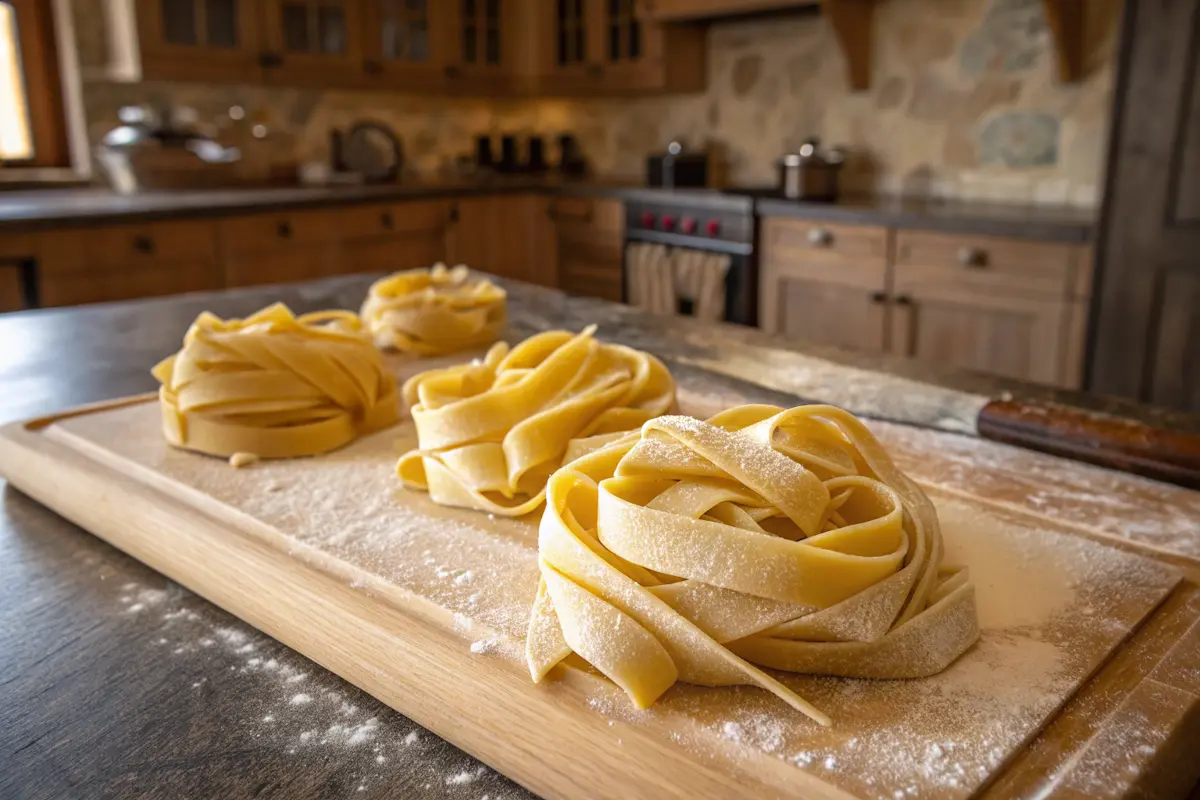
Imagine twirling a fork through wide, silky ribbons of pasta that catch every last drop of a slow-braised meat sauce. That is pappardelle, a Tuscan pasta with roots stretching back to the 14th century and a reputation as the most satisfying of all Italian ribbon pastas. But what kind of pasta is pappardelle, exactly? What makes it different from fettuccine or tagliatelle? And why do Italian cooks reach for it specifically when a ragù has been simmering for hours?
This guide answers all of it: the exact dimensions that define pappardelle, which sauces work best and why, the fresh-versus-dried debate, step-by-step cooking techniques, and five recipes worth making this week.
For a broader overview of pappardelle in Italian culinary tradition, the Pappardelle Ultimate Guide covers the pasta’s history and regional variations in depth.
Table of Contents
What Kind of Pasta Is Pappardelle? The Quick Answer
Pappardelle is a long, flat, ribbon-style egg pasta originating from Tuscany in central Italy. It is the widest of all standard Italian ribbon pastas, measuring between three quarters and one inch (20 to 25mm) across, which is two to three times wider than fettuccine and roughly four times wider than linguine.
The name comes from the Italian verb “pappare,” meaning “to gobble up” or “to eat greedily,” a reference to how irresistible these wide noodles become when properly sauced. Traditionally made with egg-enriched dough, pappardelle has a slightly porous, absorbent surface that makes it ideal for clinging to thick, chunky, slow-cooked sauces.
At a glance:
- Type: Long, flat, ribbon egg pasta
- Width: Three quarters to one inch (20 to 25mm)
- Origin: Tuscany, Italy, 14th century
- Name meaning: From “pappare,” to gobble up
- Best suited for: Heavy ragùs, game meats, wild boar, slow-cooked beef
Pappardelle versus Similar Pastas: What Is the Difference?
The most common confusion is between pappardelle, tagliatelle, and fettuccine. They are all long, flat, ribbon-style egg pastas, but their widths create meaningfully different culinary applications. Understanding what kind of pasta pappardelle is relative to its cousins is the key to choosing correctly.
| Pasta | Width | Best Sauce Pairing | Texture |
|---|---|---|---|
| Pappardelle | 3/4 to 1 inch (20 to 25mm) | Heavy ragùs, game meats, wild boar, slow-cooked beef | Soft, slightly porous, highly absorbent |
| Tagliatelle | 1/4 inch (6 to 8mm) | Bolognese, cream sauces, prosciutto | Firm, smooth, holds its shape well |
| Fettuccine | 3/8 inch (8 to 10mm) | Alfredo, carbonara, light cream sauces | Silky, delicate, excellent with emulsified sauces |
| Linguine | 1/8 inch (3 to 4mm) | Seafood, clam sauce, light olive oil preparations | Thin, flexible, best with liquid sauces |
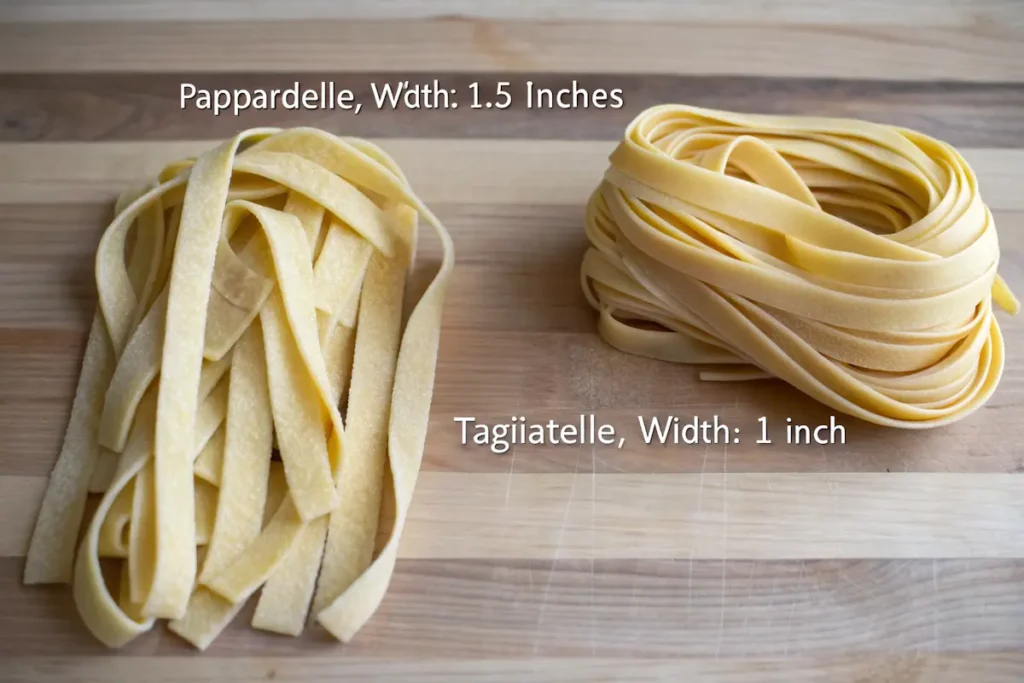
The practical rule is straightforward: the wider the pasta, the chunkier and heavier the sauce needs to be. Pappardelle’s broad surface area was designed to catch and hold pieces of braised meat that would simply slide off a thinner noodle. When your sauce has substantial chunks, pappardelle is almost always the correct choice.
Love ribbon pasta? The guide on carbonara sauce ingredients explains how fettuccine’s narrower width affects sauce behavior in cream-based preparations compared to the wider pappardelle.
Fresh versus Dried Pappardelle: Which Should You Use?
Both have a place in the kitchen, but the choice affects cooking time, texture, and which sauces perform best.
Fresh pappardelle is made from egg-enriched dough that has not been dried. It cooks in 2 to 3 minutes, has a soft and slightly delicate texture, and is ideal for the richest, most substantial meat ragùs and truffle-based cream sauces. Because it is more porous and tender than dried pasta, it absorbs sauce almost immediately on contact, which is exactly what you want with a slow-braised wild boar or beef ragù. Handle fresh pappardelle gently: it tears more easily than its dried counterpart, particularly when wet. Find it in the refrigerated section of Italian specialty markets or make it at home (instructions in the FAQ below).
Dried pappardelle is widely available in any well-stocked grocery store and cooks in 8 to 10 minutes. Its firmer texture makes it slightly more forgiving in creamy and lighter sauces, and it holds its shape better during the tossing process in the pan. When using dried pappardelle, reserve more pasta water than you think you need: the starch in the cooking water is essential for creating the emulsion that helps sauce cling to dried pasta’s smoother surface.
The one situation where fresh is always preferable: when the pasta is a centerpiece rather than a vehicle. If someone is coming to dinner specifically for handmade pappardelle, make it fresh. For a weeknight ragù, excellent dried pappardelle is a perfectly respectable choice and produces a result most people cannot distinguish from fresh once the sauce is added.
The Best Sauces for Pappardelle
Understanding what kind of pasta pappardelle is makes sauce selection intuitive. Its width, absorbency, and egg-enriched texture all point toward the same category of sauces: slow-cooked, substantial, intensely flavored preparations with texture and body.
Wild Boar Ragù (Pappardelle al Cinghiale). This is the quintessential Tuscan pappardelle preparation and the dish that most clearly explains why pappardelle exists as a pasta category. Wild boar is braised for three hours with red wine, juniper berries, rosemary, and tomato until the meat falls apart into irregular shreds that tangle into the wide noodles perfectly. The gaminess of the boar requires the substantial surface area of pappardelle to balance it. No narrower pasta achieves the same ratio of meat to noodle in each bite. If wild boar is unavailable, venison or lamb shoulder is an excellent substitute.
Beef Bolognese. The crowd-pleasing classic works beautifully with pappardelle because the chunky, slowly rendered meat sauce has the body to stand up to the wide noodles. The broad ribbons catch the meat in their folds in a way that makes every forkful contain pasta, sauce, and a piece of meat simultaneously.
Mushroom and Truffle Cream Sauce. The vegetarian option that genuinely satisfies meat-eaters. Porcini mushrooms (rehydrated, with their soaking liquid used in the sauce) with cream, garlic, Parmesan, and white truffle oil create an earthy, luxurious sauce in about 20 minutes. The mushrooms provide enough textural interest to work with pappardelle’s wide surface. This is the fastest sauce on the list by a significant margin.
Lamb Ragù with Rosemary. Braised lamb shoulder with rosemary, garlic, white wine, and tomato produces a ragù with the herbaceous richness that complements pappardelle’s egg-forward flavor. The Mediterranean herb profile works particularly well with fresh pappardelle.
For techniques on cooking tender, slow-braised meat that rivals Italian ragù quality, the beef and broccoli recipe section on achieving tender beef through proper braising temperature and timing is directly applicable to ragù preparation.
How to Cook Pappardelle Perfectly
The technique for cooking pappardelle differs from shorter pasta shapes in a few important ways, primarily because of the noodles’ width and tendency to stick.
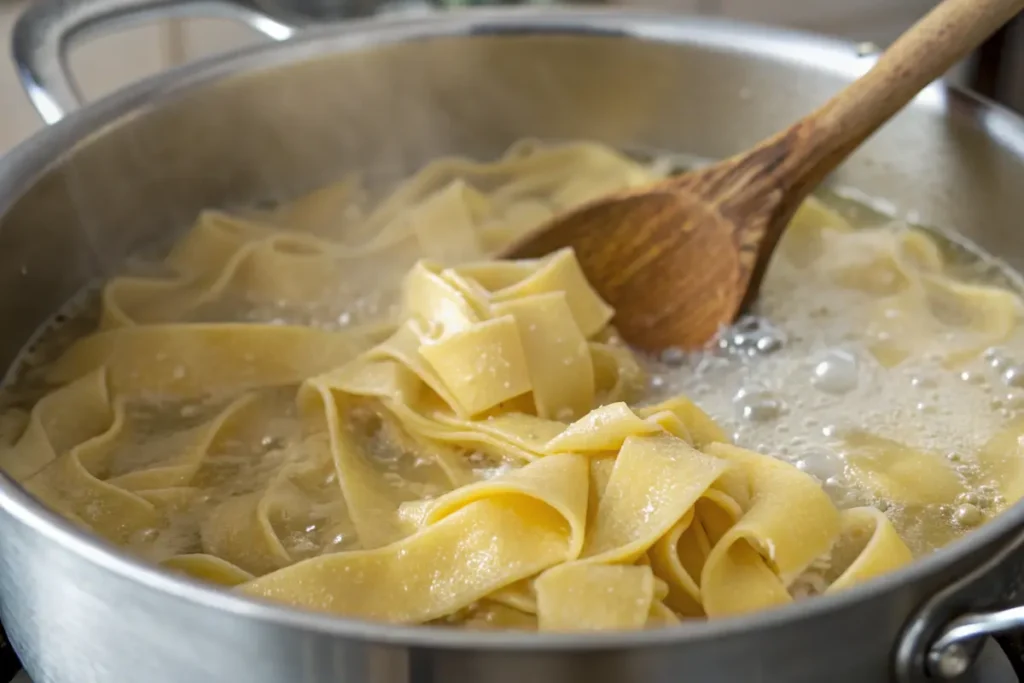
Use a very large pot. Use at least 6 quarts of water per pound of pasta. Pappardelle needs more space than any other pasta format because the wide ribbons require room to move freely and cook evenly. A crowded pot produces unevenly cooked, sticking noodles.
Salt the water generously. Add approximately 2 tablespoons of sea salt per 6 quarts of water. The water should taste distinctly salty, not like the ocean but like a well-seasoned broth. This is the only opportunity to season the pasta itself.
Add the pasta only at a full, rolling boil. A vigorous boil keeps the noodles moving, which prevents sticking and promotes even cooking. Adding pappardelle to water that is not yet fully boiling causes it to sit still in warm water and stick together.
Stir immediately and frequently. The first 60 seconds after adding pappardelle are critical. Stir vigorously as soon as the pasta goes in to separate the noodles, then continue stirring every 30 seconds throughout cooking. Wide noodles stick much more aggressively than thin ones.
Cook to al dente. Fresh pappardelle is done in 2 to 3 minutes. Dried pappardelle takes 8 to 10 minutes. Start tasting 1 minute before the package instruction suggests. “Al dente” means there is a very slight resistance at the center, not raw but not fully soft either. The pasta will continue cooking for another 30 to 60 seconds when tossed in the hot sauce.
Reserve at least 2 cups of pasta water before draining. This starchy liquid is the most important finishing tool in pasta cookery. It emulsifies into the sauce, thins it to the right consistency, and helps it cling to the noodles. Reserve more than you think you need.
Transfer directly to the saucepan rather than draining. Use tongs or a pasta fork to move the pappardelle from the cooking water directly into the pan where your sauce is waiting. Add a ladleful of pasta water simultaneously. Toss vigorously over medium heat for 30 to 60 seconds until the sauce coats every noodle and the whole mixture looks glossy and cohesive.
Finish with cold butter. One tablespoon of cold unsalted butter added off the heat and tossed in for 20 seconds creates a glossy, restaurant-quality finish by emulsifying into the sauce.
Common mistakes to avoid: breaking the noodles before cooking (they are meant to be long and should be eased gently into the pot); rinsing after cooking (this removes the starch coating that helps sauce adhere); overcooking (soft pappardelle loses its structural role in the dish); and serving plain or immediately after draining without finishing in the saucepan.
Five Pappardelle Recipes Worth Making
Classic Beef Ragù. Two hours of braising serve 6. Slow-cooked beef with red wine, canned San Marzano tomatoes, onion, celery, and carrot. The definitive Sunday dinner pasta, improved by making it a day ahead and reheating it.
Wild Boar Pappardelle. Three and a half hours, serves 4. The Tuscan original with juniper, rosemary, and red wine. Substitute venison shoulder if wild boar is unavailable. The dish that made pappardelle famous outside of Tuscany.
Creamy Mushroom and Truffle. Twenty-five minutes, serves 4. Rehydrated porcini, fresh cremini, heavy cream, garlic, and white truffle oil. The fastest and most impressive vegetarian option in the pappardelle repertoire is
Lemon, butter, and sage. Fifteen minutes, serves 4. A spring and summer preparation that lets high-quality fresh pappardelle be the focus rather than the sauce. Brown butter, fresh sage leaves, a full lemon’s worth of zest and juice, and a generous amount of aged Parmesan.
Spicy Arrabbiata. Thirty minutes, serves 4. San Marzano tomatoes, garlic, red chili flakes, and olive oil. Simple, direct, and bold. The sauce needs to be thick enough to coat the wide noodles: cook it down longer than you would for thinner pasta.
What to Serve with Pappardelle
Wine pairings. For meat ragùs, Chianti Classico is the traditional Tuscan pairing and works because its acidity cuts through the richness of the braised meat. Barolo and Brunello di Montalcino are more powerful options for the heaviest game meat preparations. For cream-based or vegetarian pappardelle, a full-bodied white such as white Burgundy, white Rhône, or a good Vermentino provides the weight needed to stand up to the richness without overwhelming the herbs and vegetables.
Side dishes. The best accompaniments to pappardelle are intentionally light and contrast-focused because the pasta itself is substantial. Good options include a simple garlic bread or focaccia for mopping the sauce remaining in the bowl; a Caprese salad with fresh mozzarella and basil for contrast of temperature and texture; roasted asparagus dressed simply with lemon and olive oil; or Tuscan white beans (cannellini) cooked with sage and garlic, which is both regionally appropriate and adds a fiber element that balances the richness of the pasta.
FAQs: What Kind of Pasta Is Pappardelle
Can I substitute tagliatelle for pappardelle?
Yes, tagliatelle is the closest substitute. It is approximately one quarter inch wide versus pappardelle’s three quarters to one inch, which means each forkful will have a different ratio of pasta to sauce. Tagliatelle works best with smoother ragùs where the sauce has been blended or where the meat has been broken down very finely. For sauces with large chunks of braised meat, the wider pappardelle is significantly better at catching and holding the pieces.
Is Pappardelle the Same as Fettuccine?
No. They are both long, flat egg pastas, but pappardelle is two to three times wider than fettuccine (three-quarters to one inch versus three-eighths of an inch). Fettuccine’s narrower, smoother surface makes it better suited for emulsified cream sauces like Alfredo and carbonara. Pappardelle’s width and absorbency make it better suited for chunky meat ragùs. Using fettuccine in a wild boar ragù or pappardelle in an Alfredo will produce an acceptable result, but neither is the optimal match.
Where Can I Buy Pappardelle?
Dried pappardelle is available in the pasta aisle of most well-stocked grocery stores. Fresh pappardelle is found in the refrigerated section of Italian specialty markets and many larger supermarkets with an artisan pasta section. It is also widely available from online retailers. If none of these options are available, making pappardelle from scratch requires only flour, eggs, and a rolling pin.
Can I Make Pappardelle from Scratch?
Absolutely, and homemade pappardelle made fresh takes this pasta to a completely different level. The basic formula: combine 2 cups (240g) of 00 flour or all-purpose flour with 3 large eggs and mix until a smooth dough forms (add water a teaspoon at a time if the dough feels dry). Knead for 8 to 10 minutes until elastic and smooth, wrap in plastic, and rest at room temperature for 30 minutes. Roll thin (about 1 to 2 mm) using a pasta machine or rolling pin. Cut into strips approximately one inch wide. Cook fresh within an hour of cutting or dust generously with semolina flour and refrigerate for up to 24 hours.
For the correct pronunciation of this pasta’s name before you host your dinner party, the guide on how to pronounce pappardelle covers the Italian phonetics and common mispronunciations.
The Bottom Line
What kind of pasta is pappardelle? It is the widest, most indulgent member of the Italian ribbon pasta family, purpose-built for the slow-braised, chunky, deeply savory sauces of Tuscan cooking. Its width, its absorbency, and its egg-enriched texture are all designed for one thing: catching and holding every piece of a ragù that a narrower noodle would let slip away.
Whether you reach for fresh pappardelle from a specialty market or a quality dried version from the grocery store, the technique matters more than the format. Salt your water well, stir frequently, reserve your pasta water, finish the noodles in the saucepan, and add cold butter at the end. Those steps, applied consistently, produce pappardelle that tastes like it’s from a restaurant.
Uncork a Chianti, start the ragù early, and bring Tuscany to your table tonight.
Explore more: how to pronounce “pappardelle” | carbonara sauce guide | beef cooking techniques
✨ Love Pappardelle?
Save our visual guide to Pinterest for quick reference!
📌 Save Visual GuideWidth comparisons • Techniques • Sauce pairings