
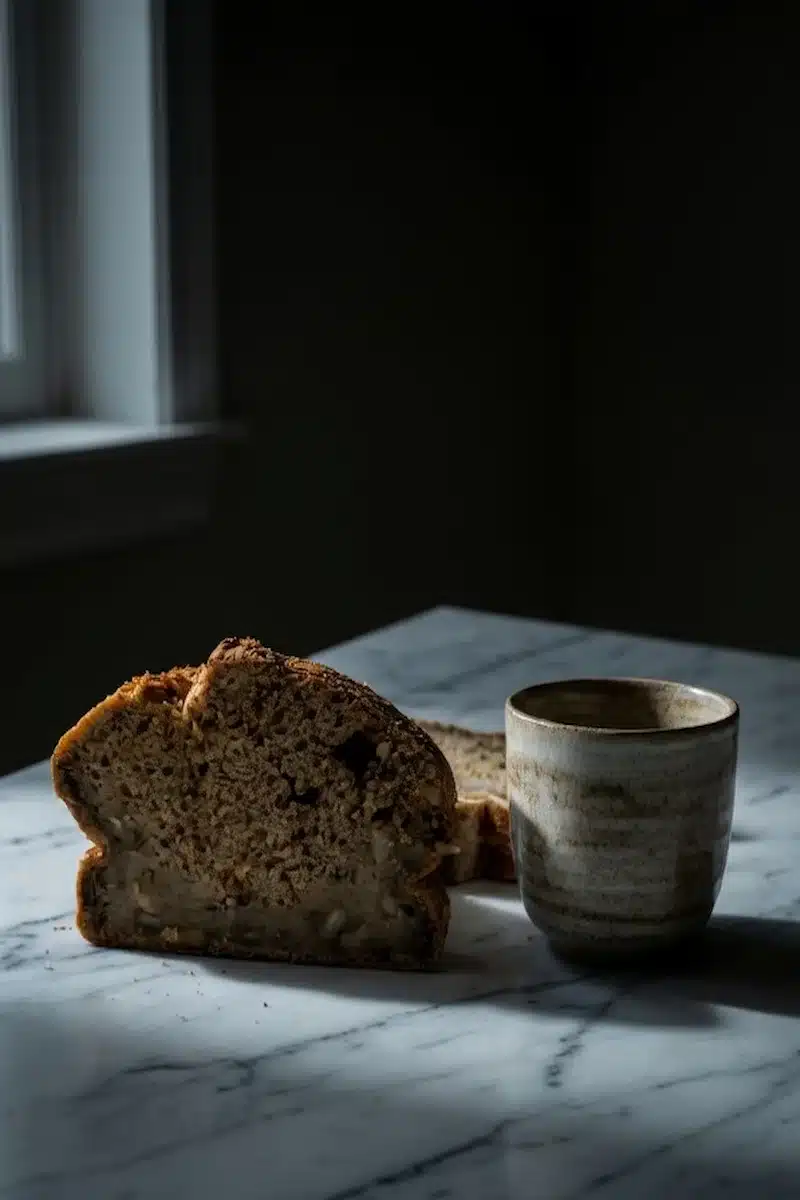
It often starts the same way. You pull a beautiful loaf from the oven. The top is golden, the smell fills the kitchen, and everything suggests success. Then, slowly and almost unexpectedly, the center begins to sink. At that moment, the question becomes unavoidable: why did banana bread collapse, even when everything seemed right?
This problem feels confusing because banana bread is considered a simple recipe. It uses familiar ingredients. It follows straightforward steps. Yet the outcome can vary dramatically depending on small details that are easy to overlook.
The truth is that banana bread sits in a delicate balance between moisture and structure. When that balance shifts even slightly, the loaf may rise perfectly but fail to hold itself together. That is why collapse often feels sudden. In reality, the conditions for it were already building during baking.
In this guide, we will break down why did banana bread collapse in a way that goes beyond surface-level tips. Instead of just listing mistakes, we will look at how and why those mistakes affect the structure of the bread. Once you understand that process, the fixes become logical, predictable, and repeatable.
Table of Contents
Banana Bread That Doesn’t Collapse

A structurally balanced banana bread designed to prevent sinking in the center. This recipe controls moisture, ensures proper setting, and delivers a soft, stable crumb every time.
- Prep Time: 10 minutes
- Cook Time: 55 minutes
- Total Time: 1 hour 5 minutes
- Yield: 1 loaf (8 slices) 1x
- Category: Baking
- Method: Oven
- Cuisine: American
- Diet: Vegetarian
Ingredients
- 3 medium ripe bananas (mashed, not overly wet)
- 2 large eggs
- 100g granulated sugar
- 60ml vegetable oil or melted butter
- 180g all-purpose flour
- 1 teaspoon baking soda
- 1/2 teaspoon salt
- 1 teaspoon vanilla extract
Instructions
- Preheat oven to 175°C.
- Mash bananas until smooth but not watery.
- Whisk eggs, sugar, oil, and vanilla until combined.
- Add mashed bananas and mix gently.
- In a separate bowl, combine flour, baking soda, and salt.
- Fold dry ingredients into wet mixture until just combined (do not overmix).
- Pour batter into a lined loaf pan (do not overfill).
- Bake for 50 to 60 minutes without opening the oven early.
- Check doneness: a toothpick should come out clean and internal temperature should reach about 200°F (93°C).
- Let cool in pan for 10 minutes, then transfer to a rack to cool completely before slicing.
Notes
Use balanced banana quantity to avoid excess moisture. Do not open the oven during baking. Always cool on a rack to prevent steam from weakening the structure.
Nutrition
- Serving Size: 1 slice
- Calories: 210
- Sugar: 14g
- Sodium: 180mg
- Fat: 8g
- Saturated Fat: 2g
- Unsaturated Fat: 5g
- Trans Fat: 0g
- Carbohydrates: 30g
- Fiber: 2g
- Protein: 4g
- Cholesterol: 45mg
Personal Story & Understanding the Core Problem
Why Did Banana Bread Collapse in Real Kitchens
The first time I seriously questioned why did banana bread collapse, I had just taken a loaf out of the oven that looked exactly right. It had risen evenly, the top had split slightly down the middle, and the color was perfect. There was no reason to expect a problem.
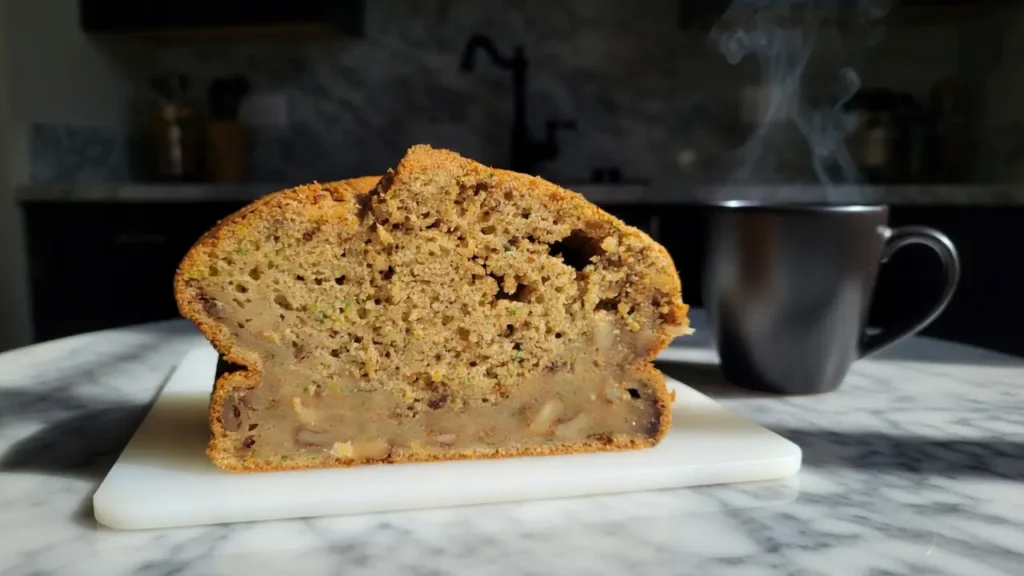
However, within minutes, the center sank. Not dramatically at first, but enough to change the texture completely. What should have been soft and airy turned dense and slightly wet in the middle.
That experience forced me to rethink how I approached baking. Up until that point, I treated recipes as instructions to follow. But that loaf made it clear that baking is not just about steps. It is about understanding how ingredients behave together under heat.
In my kitchen, which has always been a place where simple ingredients turn into meaningful meals, that moment became a turning point. Instead of asking “what went wrong,” I started asking “what happened inside the batter while it baked.”
If you look at a well-balanced loaf like this cottage cheese banana bread, you can see the difference. The structure holds, the crumb is even, and the center remains stable. That is not accidental. It is the result of controlled interactions between moisture, air, and structure.
The Real Mechanism Behind Collapse
To truly answer why did banana bread collapse, you need to understand that two processes happen at the same time during baking:
- Expansion – gases form and push the batter upward
- Setting – proteins and starches solidify to hold that shape
When these two processes stay in balance, the bread rises and holds its form. However, when they fall out of sync, collapse becomes almost inevitable.
If expansion happens too quickly, the structure stretches before it has strength. It becomes fragile. Then, as soon as the heat drops or the loaf is removed, that fragile structure cannot support itself.
On the other hand, if setting happens too slowly, the gases escape before they are trapped. This creates a dense center that may later sink under its own weight.
This is why banana bread often looks perfect before collapsing. The problem is not visible at the surface. It is already built into the internal structure.
For a related issue, this guide on why banana bread is not cooked in the middle explains how incomplete setting leads to similar results.
Understanding how structure forms during baking is essential, and as explained by baking experts at King Arthur Baking, collapse often happens when the internal structure fails to set properly before cooling.”
Ingredient Imbalance and Structural Weakness
Why Did Banana Bread Collapse Because of Ingredients
When people ask why did banana bread collapse, they often underestimate how sensitive the recipe is to ingredient ratios.
Bananas are the most obvious factor. They add flavor and moisture, but they also introduce a large amount of water. If you add too many bananas, the batter becomes heavier and more fluid. That makes it harder for the structure to form properly.
Sugar creates a similar issue. While it enhances flavor and softness, too much sugar weakens the internal network that holds the bread together. The loaf may rise well, but it lacks the strength to stay upright.
Flour is the counterbalance. It provides structure. When there is not enough flour, the bread simply does not have the support it needs. The result is predictable. It rises, then collapses.
I once tested a version with extra banana puree. The flavor improved slightly, but the structure failed completely. That experiment made it clear that more of a good ingredient is not always better.
You can compare this with a balanced formula like this angular banana bread recipe where each component supports the others.
Choosing Ingredients That Support Stability
Preventing why did banana bread collapse starts before baking even begins.
Bananas should be ripe enough to mash easily, but not so overripe that they release excess liquid. That subtle difference changes the entire batter consistency.
Eggs are essential because they act as a structural anchor. They bind ingredients together and help the loaf hold its shape as it cools.
Leavening agents also need attention. Baking soda that has lost potency will not produce consistent lift. That creates uneven expansion, which often leads to collapse.
Flour should remain consistent unless adjustments are made carefully. Changing flour types without recalculating ratios can weaken the structure.
If you want to understand timing and ingredient condition more deeply, this article on when not to use bananas in baking adds valuable context.
Technique Errors That Disrupt the Process
Why Did Banana Bread Collapse During Baking
Even with perfect ingredients, technique can still answer the question why did banana bread collapse.
One of the most common mistakes is opening the oven door too early. This creates a sudden drop in temperature, which interrupts the expansion process. The structure has not set yet, so it weakens immediately.
Another issue is uneven heat. If the oven temperature fluctuates, the bread may rise too quickly in some areas and too slowly in others. That uneven structure cannot hold consistently.
Mixing also plays a role. Overmixing reduces the air incorporated into the batter, while undermixing creates pockets of uneven density. Both interfere with proper rise.
I learned this through repeated testing. A loaf that seemed identical on the surface could behave completely differently depending on how it was mixed or when the oven was opened.
For more insight into how timing affects cooking results, this guide on how long hash browns take in an air fryer shows how precision influences texture.
Cooling: The Hidden Cause of Collapse
Cooling is often ignored, yet it directly impacts why did banana bread collapse.
When the loaf comes out of the oven, the structure is still stabilizing. If it remains in the pan, steam builds up and softens the interior. That weakens the structure and leads to sinking.
Cutting the bread too early creates another issue. Steam escapes rapidly, leaving the internal structure unsupported.
The correct approach is simple but important. Remove the bread from the pan after a few minutes and allow it to cool on a rack. This keeps airflow consistent and prevents trapped moisture.
For more structural insight, this article on why sourdough pancakes are better explains how internal structure affects final texture.
Advanced Factors and Expert-Level Control
Why Did Banana Bread Collapse Even When Following a Recipe
Sometimes, even when everything seems correct, you still ask why did banana bread collapse. At that point, external variables become important.
Humidity changes how flour absorbs moisture. High altitude alters how quickly gases expand. Even the material of the baking pan changes heat distribution.
Glass pans retain heat differently than metal pans. This can delay structure setting and lead to collapse if not adjusted.
Substitutions also introduce variability. Replacing ingredients without understanding their function can weaken the structure in subtle ways.
I once switched to a different pan without changing anything else. The loaf collapsed. After adjusting the baking time slightly, the problem disappeared. That small detail made a noticeable difference.
For another example of how technique matters, this sourdough cinnamon bread shows how controlled adjustments improve consistency.
Expert Secrets for Consistent Results
Professional bakers approach why did banana bread collapse by controlling variables rather than reacting to mistakes.
They measure ingredients precisely. They monitor oven temperature closely. They understand that small changes can affect the outcome.
One of the most reliable methods is checking internal temperature. Banana bread is fully baked around 200°F. This confirms that the structure has set completely.
They also avoid overfilling pans. Leaving space allows the bread to rise evenly without stressing the structure.
Finally, they respect cooling time. Allowing the bread to rest fully before slicing ensures that the internal structure remains intact.
Want a quick visual breakdown of why banana bread sinks? You can also check this helpful Pinterest guide.
FAQ Section:
Why has my banana bread collapsed?
Banana bread collapses when the internal structure does not fully set during baking. This often happens because the batter contains too much moisture or the loaf is removed from the oven too early. When the center remains soft, it cannot support the weight of the top as it cools. As a result, the bread sinks in the middle and becomes dense. To prevent this, always bake until the center is fully set and stable.
How to keep banana bread from caving in?
To keep banana bread from caving in, you need to maintain balance between ingredients and baking time. Use the correct number of bananas, avoid excess liquid, and measure flour accurately. Bake the loaf at a consistent temperature and avoid opening the oven too early. Additionally, allow the bread to cool on a rack so steam can escape properly. These steps help the structure remain firm and prevent collapse.
Why was banana bread so popular during lockdown?
Banana bread became widely popular during lockdown because it uses simple and accessible ingredients. Many people had ripe bananas at home and wanted to avoid wasting them. Baking also provided comfort and a sense of routine during uncertain times. Sharing banana bread recipes online created a strong sense of community. This trend made banana bread one of the most recognizable home-baked recipes.
Why did my chocolate chips sink to the bottom in my banana bread?
Chocolate chips sink when the batter is too thin or lacks enough structure to hold them in place. This usually happens due to excess moisture or insufficient flour. To fix this, coat the chocolate chips lightly in flour before adding them to the batter. This helps them stay evenly distributed during baking. A thicker batter also improves overall texture and prevents sinking.
Conclusion
Now the question why did banana bread collapse becomes much easier to answer. It is not random, and it is not mysterious. It is the result of imbalance between expansion and structure.
Once you understand that relationship, every fix becomes logical. You adjust moisture, control temperature, and allow the structure to set properly.
Banana bread is simple, but it rewards attention to detail. With these insights, you can bake with confidence and achieve consistent, stable results every time.
Chef’s Tips or Expert Tips
My Secret Tip For a Perfect Banana Bread
My secret tip is to focus on structure, not just flavor. Use ripe bananas, but avoid excess moisture. Always check the center before removing the loaf from the oven.
Let the bread cool completely before slicing. This step feels small, yet it makes a significant difference. When the structure is allowed to fully set, the loaf stays soft, stable, and satisfying every time.